The Sweep -
November 2026
Welcome to the reimagined The Sweep a new monthly publication from the Virginia Canals & Navigations Society, keeping us connected between trips, festivals, and gatherings.
Here we’ll share stories from our river community, news of what members are doing, and selections from past issues of The Tiller that bring our waterways’ history into the conversation. Whether you’re here for the boats, the history, or the people, we hope you’ll find something worth reading—and add your own memories, photographs, questions, and practical knowledge along the way.
From the past, The Tiller Vol.22, Issue 4
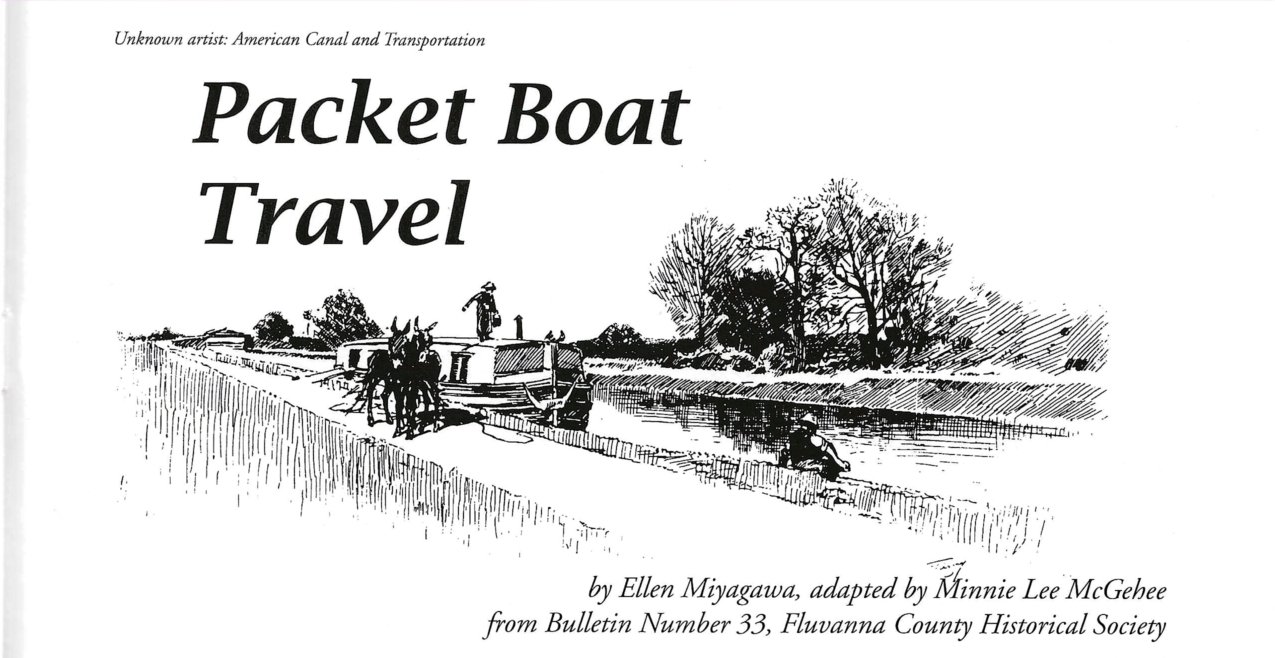
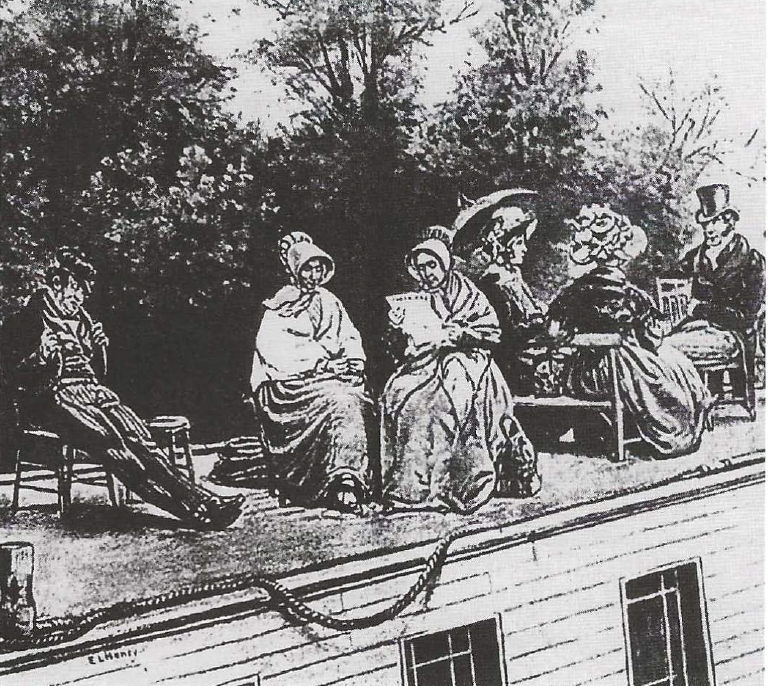
M. W Early in his Packet Boat Days expressed the prevailing feelings on canal travel:
“ This mode of travel, which now seems so antiquated, so slow and tedious, was in harmony with the spirt and customs of old Virginia. We were a leisurely people, eminently social in our instincts and habits, and we did not care to rush through life, whether travelling or at home. "
Packets would stop at every boat landing to receive and discharge passengers and deliver mail. Legend has it that the packets really provided better mail service to those living near the canal than we enjoy today. It was possible to receive mail twice a day; one from Richmond and the other from points west.
.. .The trip from Richmond to Lynchburg took 33 hours, quite an improvement over the ten days taken by batteaux. James Kirkwood wrote, "While the freight boats gave the canal its econmic value, the packet boats gave it its romance. "
Packets were 75 to 80 feet long and about 11 feet wide. The main cabin was 36 to 45 feet long... At 9:00 P.M. the cabin was [prepared for the night]; a heavy baize curtain divided the front section for women and children, the rest for men. Berths were hung in rows, three deep from the ceiling, and were closely packed to accommodate 40 or more people. The berths were very narrow and short and were furnished with a pillow and lumpy mattress. The romance of the trip must have waned a bit on a hot summer night!
After a somewhat sleepless night of being roused by the horn near each lock, plus accompanying noise on the deck overhead, passengers were awakened early. “Washing up" was performed in a primitive fashion. Everyone stood on deck with a towel over his arm, waiting his turn at a big tin bowl. A tin dipper with a very long handle was dipped into the canal for a generous scoop of slightly muddy water.
While passengers were busy outside, the crew was.turning the sleeping space back into saloon and setting the table for breakfast. One anonymous traveler wrote humorously:
“This table ... is a mystery of itself During the night it has been a very placid and unobtrusive article offering space only for a lantern and half a doen hats, while at breakfast time it has expanded to a most aggressive and amazing degree, taking up the entire length and half the breadth of the cabin; and I am fain to suspect that it is no table at all, but simply the sleeping shelves in a new and startling character. "
The travelers remembered that in the stern, near the crew's quarters, the cook in his tiny kitchen somehow managed to turn out elegant fare, equaling that of the finest Richmond hotels. The best that the market afforded was served: ham, fish, oysters, turkey, and always a plentiful supply of treats such as almonds and raisins. Fresh butter and eggs were bought along the line. All this was included in the fare, which in the 1850s was $5.27 from Richmond to Lynchburg.
Packet boats hummed with activity. Children ran about playing, sometimes watched over by nursemaids. Mr. Early wrote that the passengers
...“would while away the time with conversation ( which was the chief delight of old Virginians), or the gentlemen would play backgammon a great deal. . . whilst the ladies often carried a little fancy work along with them. . .. Sometimes one of the passengers would have a violin or guitar along and would favor the rest of the company with some music. "
Aboard the packet boats a warning cry of "low bridge!" would cause everyone to bed down or even lie prone to avoid being struck as they passed under innumerable far.qi bridges. Perhaps it was a low bridge that "did in" poor Ellen Killey. In 18 51, she was traveling all the way from the Isle of Man to Lynchburg with her two small sons. She fell from the packet boat Link and drowned in the canal. Captain Yateman retrieved her body and arranged to put it off at Mosby's Lock (Lock 21). For some reason, she was buried near Lockl 9 in the Martin Tutwiler family-burying place.
Fifty-eight years later, in 1910, her son, Dr. Phillip Killey, came searching for her grave. He went first to Mt. Airy, near where his mother drowned, and was directed to the Tutwiler farm, then owned by Crenshaw Bugg. Within a few days, Dr. Killey andA.J. Seay moved her remains to the cemetery at Seay's Chapel near Shores in Fluvanna:
Eleanor Crellin
wife of Capt. James Killey
born on the Isle of Man
May 10, 1817
was drowned in the
canal near here
December 13, 1851
Sometimes a group of people would get off the packet and walk from one lock to the next when the distance '}'as not too great. This little diversion was especially popular with the young people who were courting, or just merely flirting. The daily arrival of the packets at boat landings was a social event, when the local folk would gather to visit, see and be seen, and catch up on